Do You Think Selling is Unprofessional?
In this series, I’m talking about what prevents someone from joining a Network Marketing business. Some people feel as though the profession of selling is unprofessional or beneath them.
Are we helping people or manipulating them? Here’s my take…
Develop Your Own Independent View
If you have a prospect who shares this opinion, you’ve got to help them to have an independent point of view. They’ve got to look at it as:
- How am I going to act?
- How am I going to be?
- What are my disciplines?
- What are my protocols?
- When do I say no?
- When do I say yes?
- When do I keep on going to help the person get what they want?
Help them to NOT look at it like:
- When do I try to manipulate them?
Tom Hopkins And His “Tie Down” Phrases
Despite my last name being Sales, Tim Sales, (and yes, it was Sales in the bomb squad too.) I didn’t change my name because I got into sales. My dad’s name was Sales.
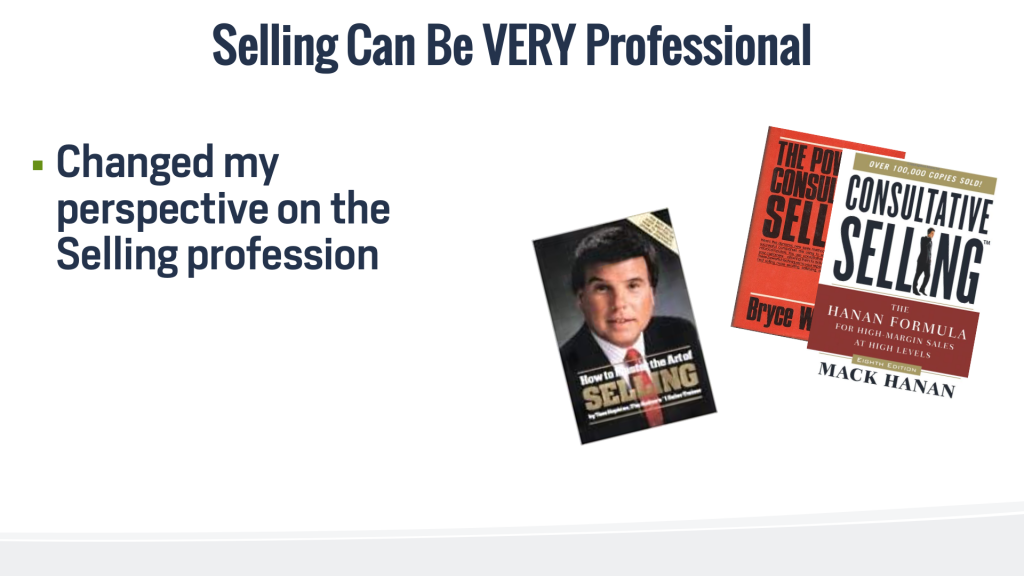
Selling can be very professional, and it can also not be professional. The first sales book that I had ever read (I was on a Navy ship when I read it) was “How to Master the Art of Selling” by Tom Hopkins.
I liked his work, and he may have written other books that were differently positioned, but this particular book had to do with what were called “tie-down phrases.”
For example, if a customer said, “Do you have this refrigerator in silver?” he would suggest you say, “Well, if I can get it in silver, are you ready to buy today?”
That was a tie-down phrase that he would use to tie you into the contract or to buy that thing.
That book was full of these types of phrases. I remember that as I read it, I felt like if that were me, I would be manipulating somebody. And I didn’t like the feel of that, even though I had no experience whatsoever at selling a single thing.
Consultative Selling = Solving Problems for People
When I got into network marketing, my upline showed me the book “Consultative Selling: The Hanan Formula for High-Margin Sales at High Levels” by Mack Hanan.
In consultative selling what you’re doing is solving problems for people. And that’s your only purpose. You’re just there to help the person get this thing, whatever it is that they want.
That was, in essence, what I referenced earlier about having an independent point of view.
It’s very important for a person to take on an independent point of view, not a crowd point of view, because that is how you can differentiate yourself to being very professional.
I was introduced the other day with a person on a Zoom call and he said, “I invited Tim on because he’s kind of known around the industry as being very professional, non rah-rah, no hype. If he’s going to sell something, he’s going to be walking you through why this is better than that.”
It’s differentiation. That was a very decisive thing that I did way back in 1989. I created that independent point of view. I don’t care if people are using that Tom Hopkins book – I’m not going to. That’s why I say selling can be very professional.
The Business of Making Someone’s Life Better
I truly do not believe that there is a more professional profession than selling.
I can explain to you why, because first, there isn’t a single organization that does not require selling. Just really think about it. Where does anyone’s money come from?
Someone feels that by reaching into their pocket and pulling out their wallet (or their purse) and handing over a credit card, or money, that their life is going to be made better.
That is the only reason someone reaches in and grabs the wallet to do it. That is the only thing that transfers money over to the business.
If a business is in business, someone’s got to be doing the Pipeline, so someone’s got to be doing the selling.
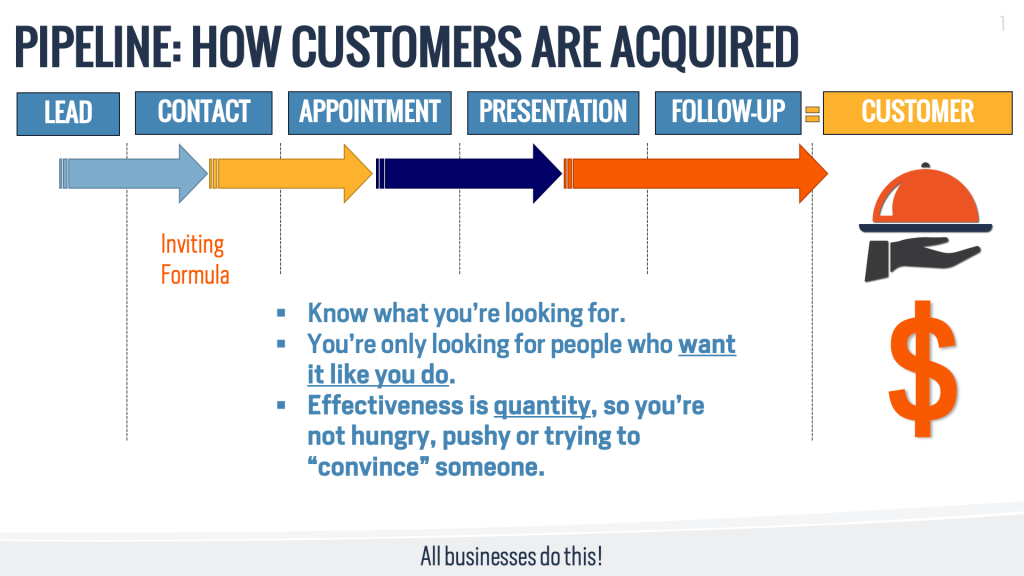
Now, I chose to do something that I call the “Inviting Formula.” (You can get my in depth training on the Inviting Formula here.)
There’s only one business in the world, the business of making someone’s life better. Those are the ones that last a long, long time. They’re the ones that build the great reputation.
It is based upon the idea that I need to be able to talk to the person and find out what they need and want, or maybe in their case, what things they don’t want.
Maybe right now they don’t want a sore back when they wake up. They’re looking for a mattress that’s not going to give them a sore back.
All of this is acquired in contacting someone and finding out: “What do you want? What do you not want anymore?”
When you find that out, you ask the question, “Can I help the person?” If I don’t have a product to help that person, then I’m going to refer them somewhere else that I know that they might look, or I’m going to dismiss it and say, “I’m sorry, I don’t have anything that serves that.”
That is the ethics part, when someone’s willing to actually say that, instead of trying to manipulate them.
For example, an action that I would not necessarily do is if the person wants a bed, sell them a phone because that’s what I sell. That’s not the way I work.
I want to find out, can I help this person get what they want? If so, I’m going to show them something that will explain that to them.
It might be me that shows them there, right on the spot. Or maybe I set an appointment. If so, I say, “I want to show you a presentation. Can we do it at such and such a time?” That’s all setting an appointment is about.
How Often Should You Follow Up?
Once they’ve looked at it, they might say they want to think about it. Well, my job is to follow up because they said they wanted something and I want to help them get that thing.
I am going to follow up because of all the customers, I will have to follow up for 50% of them. The other 50% of them are going to sign up on the spot. If I don’t follow up, half of them don’t get it.
If they say, “No thank you,” it’s all right, I put them on the far side of the Pipeline in the “Not Interested” category. When they say, “No, thank you. I don’t want it,” then, very good. We’re done.
If I follow up with them, I will follow up with them seven times. If they don’t respond in those seven times, the seventh call is a conclusion. I just say, “I’m not going to call you anymore. I assume that you’ve already gotten what you wanted.”
I just conclude it. It concludes it in my universe. It concludes in this person’s universe. That conversation is final. That’s a very necessary part of it, but I’m not going too far into training here. I’m just kind of giving you the idea of professionalism in this sense.
The main thing is, find out what they need, want, or don’t want and help them get that.
Tips on Recruiting Other Sales Reps
Most of that was conversation having to do with the customer. It also applies in a business setting as well, where you are trying to get representatives.
The main thing for you to do when you’re looking for a sales rep is to find out what they want. Normally it’s money or time freedom or something like that. Know what you’re looking for.
Number two, you’re only looking for people who want it like you do. It’s not about trying to convince that person. I’m not going to try to convince my wife to marry me. No, no, no, no. We need to come to that agreement together. She’s got to want me as much as I want her.
That’s the same type of a relationship I’m looking for in business. When I do the pipeline, I’m looking for somebody who wants it as much as I want it.
The last point is effectiveness in the quantity of people you move across the Pipeline (Get your Pipeline training here!) in order for you to find that person who wants it like you do.
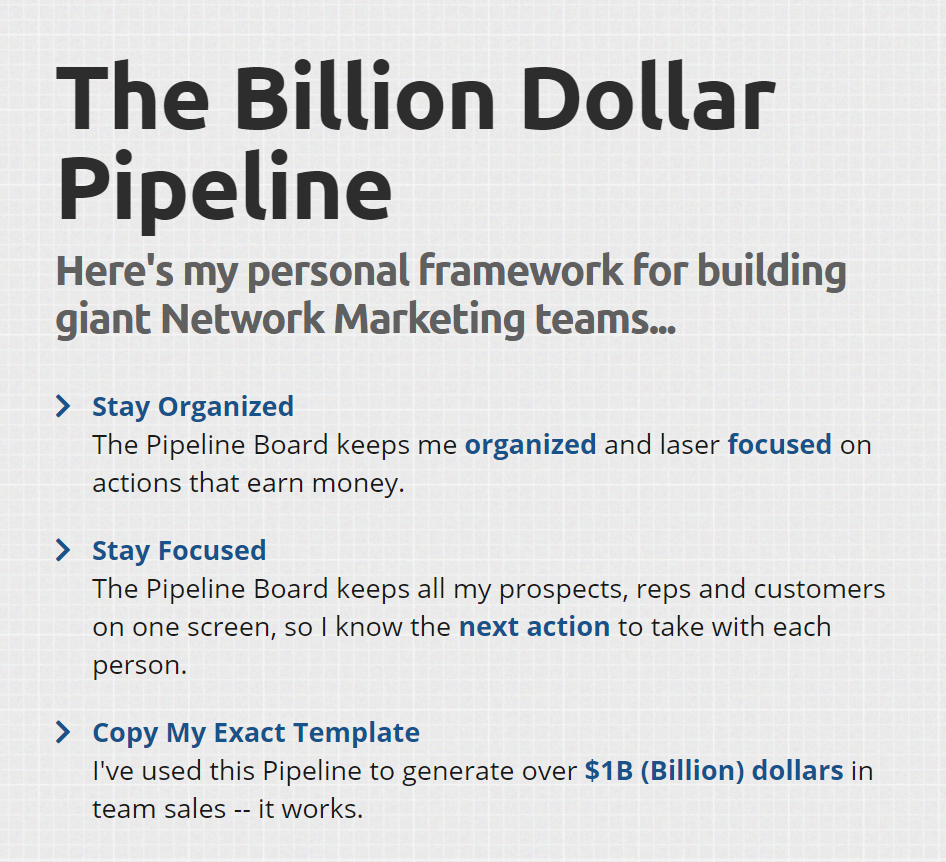
That is the reason that I’m never hungry, pushy, or trying to convince somebody if I set a goal.
In January of last year, I said, “I’m going to double my income.” That wasn’t about convincing more people that I got on the phone with.
It was about more quantity across the Pipeline. That’s the way that I always view it: I’m going to move more quantity across the Pipeline.
Now, it’s your turn. I’d love to know what you think about this topic. What experiences have you had that demonstrate a professional sales experience, or even an unprofessional sales experience? I’d love to hear your thoughts.
P.S. If you don’t have a team, haven’t recruited anyone (or less than 10 people), this is THE course you should get – Network Marketing Training Course