First Do No Harm – Ethics in Network Marketing
If you’re in business, your ethics have to be right if you want to succeed. I was talking with a salesman recently who was feeling bad that he had pushed someone into buying something, and they ended up losing money.
Have you ever felt that way?
In network marketing, we have a duty and a responsibility to represent ourselves and our company truthfully and accurately.
Transparency and “rules of engagement” are key. Many times, a prospect doesn’t want to join because they don’t want to risk causing harm to another. I get it.
So let’s unpack this one, so you can really become a professional network marketer.

I mentioned that recently I had a conversation with a person in sales, who felt that he had pushed someone into buying something, and the person lost money and didn’t get a fair exchange for what they paid for.
He felt bad because he pushed that person along, and that was bothering him.
This is such a legitimate concern and real worry for some people.
If you’re a good person, it’s hard to go long-term in a business when you harm people.
What I’ve found throughout my business career in network marketing, is that I’ve chosen to follow correct ethics. And because of this I’ve been able to enjoy long-term success.
Whose Responsibility Is It?
The first part of following correct ethics is the assignment of responsibility.
If I bring someone into the business, there are certain things that are my responsibility as the sponsor and there are also certain things that are the responsibility of my new rep.
Transparency and rules of engagement are the key.
Clearly define what the sponsor will do. What are the things that the sponsor must get done in this partnership?
Likewise, what will the new recruit do? What are the things that the recruit must get done in this partnership?

How much responsibility is on you and how much responsibility is on the new rep?
You Are Not The “Opportunity”
You are not the “opportunity.” You are the messenger, you’re the person carrying the message. If you invite someone to church, you’re not saying you’re God, or that you can forgive their sins. You’re not doing that. You’re just saying, “Let’s go to church.”
If you invite somebody to yoga or the gym, you’re not saying, “I’m going to make you fit.” It’s more like, “Hey, let’s go to the gym.”
If you invite someone to college or a vocational course, you are not going to make them know the subject. In the school system, it’s, “We’re here to teach you this subject.”

I think it’s the same way in network marketing.
In network marketing, you’re not saying, “I’m going to make you rich.” You’re not saying, “I’m going to cure something because of my product.” You are; however, willing to teach someone how to do the business. Show them. Train them. But it’s their responsibility to do the income producing items, right?
These are the guiding principles I follow to enure my ethics are in-check.
Guiding Principle 1: Tell the Truth
Number one, is that any time I say anything about the company, I only state what I know is true. Tell the truth. I’m not going to embellish something.
If you lie or embellish then you’re going to feel bad about it.
Always be straight up and honest.
Guiding Principle 2: Don’t Oversell
Someone asks, “When is this country going to open up?”
I say, “I’ve got a strong rule on that. I don’t say.”
Someone asks, “When is this app going to be available?”
I say, “Well, every app that I have ever worked with in my life, whatever the launch date is stated, I always add a year.”
I don’t oversell. That’s what I’m trying to say.
Regarding products, I don’t exaggerate. I state what they do. Period.
On the business, I don’t exaggerate: “People do earn $1000,000. People do earn zero.”
Guiding Principle 3: Be Upfront About What They Will Be Doing
State what they will be doing.
This is a big one. In fact, I put somebody through a test before I’m willing to sponsor them and I’m going to put you through it in just a second.
It’s simple, but make sure that they understand it. I have to know that they know what they would be doing if they were to join me.
I walk them through this real estate scenario, that is unrelated to Network Marketing.

I say, “I’m going to walk you through real estate. Let’s say you’re somebody who started in a real estate agent course. You went through all of these attrition gates and you made it and you got your license. You pass the exam. Every year, of those who passed the exam, 12,500 people did not sell one home. Why not?”
The prospect will normally say, “Well, they didn’t want it.”
And I say, “That could be part of it, but let’s get real specific. Let’s say on the day-to-day of life, what didn’t they do?”
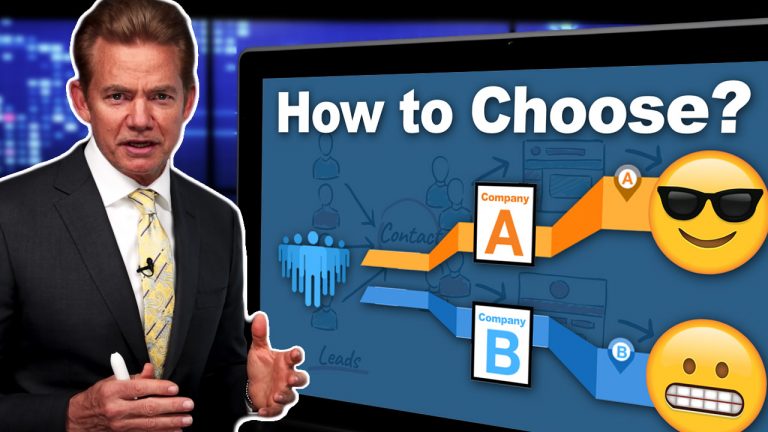
Then, I show them this:

I say, “Let me just give you a little hint. A $225,000 home, which is the average price, gives a commission of $5,000.
In order to make $50,000, you need to sell 10 homes. $50,000 would give you the median income of a real estate agent, but you’re going to have to move some volume. So let’s say that you had to move 10 leads across the pipeline. So you’d have to generate a lead.”
I continue: “What do they do? They did some advertising and generated a lead; maybe a sign in the yard or a newspaper ad. And then someone calls and they set an appointment to show the house.”
That makes sense. They say, “Yeah. Yeah.”
And I say, “Can you think of anything else that they do?”
They say, “No.”
I say, “Yeah, that’s all they do.
They’re going to generate leads. They’re going to contact, they’re going to put them in front of the house, and eventually they’re going to sell one.
If 12,500 people don’t sell a house after going through all of this process, what did they NOT do?”
That’s the conversation I have with every single prospect that I talk to. I have to have this little discussion with them. It’s a test for me. And I have to keep on going back and forth until they say the words:
“I’d have to put enough prospects across the pipeline.”
That’s when I know, that they know what they would be doing.
What It Takes to Make Money in Network Marketing
Once they get it, I say, “Good. If you were in network marketing, the same 700,000 people start, and about 200,000 people didn’t sell one product. Why didn’t they sell one product?”
They have to say, “It is leads across the pipeline.”
I want them to “get” that it’s all about the pipeline 100%.
I’m not trying to close them into the business. I don’t want to close anybody into the business because I’ll have to close them again tomorrow and the next day and the next day. No, I want somebody who wants it as much as I do.
I want to put them through the test so that they know they are going to be doing the pipeline.

This is the game. If you play football, you wear a certain helmet and you chase a particular design of a ball. If you play basketball, you shoot into hoops.
Whatever your game is, this pipeline is the game.
If you want to be a millionaire, you’re going to have to move a whole lot of people across the pipeline. If you only want to sell one product, you would move fewer people, but you still have to move them across the pipeline.
That is it.
Responsibility
From the responsibility standpoint:
- I make certain they know the only way to not sell one product is insufficient quantity across the pipeline.
- I make certain the only way to not recruit one person is insufficient quantity across the pipeline.
That is my big, big thing. I don’t exaggerate. I also tell them what it actually takes.

PipelineBoard.com
I include that every business in the world does this, so if you say, “Oh, I don’t want to do this,” then you’re going to have to hire someone in order to do this. And how are you going to hire someone to do this? You’re going to recruit them. One way or another, you’re going to have to do the pipeline, even if it’s to recruit somebody to do the pipeline for you.
It’s funny to me that someone gets this whole idea that if they show the business to someone and then that person doesn’t succeed, then they’re on the hook for it.
I believe they are only on the hook for it if they didn’t have this agreement between the two of them and say:
“Hey, you and I are going to go to the gym together and we’re going to work out. If I quit, it doesn’t mean that you don’t want to get fit or that you don’t have the right to keep on going and get fit. And if you quit, it doesn’t mean that I’m going to quit. It just means that I might keep going.”
As long as that is understood, you can play the game with your ethics in check for a long time and you can be very successful with it.
I hope that helps ease your mind.
Change your operating basis, if you need to, in order to get that dialed in. This is mine.
You can have your own set of engagement rules, but both sides must know what the rules are.
P.S. If you don’t have a team, haven’t recruited anyone (or less than 10 people), this is THE course you should get – Network Marketing Training Course